
Introduction
Trees in Fairfax County are being overtaken by invasive vines, and native plants are being crowded out by non-native invasives, vastly reducing our population of native birds, and pollinators such as butterflies and bees. In the coming months, this new section of the supervisor newsletter will bring you ideas for how to save your trees from invasive vines, rid your yard of non-native plants, and create a more biodiverse yard space through the inclusion of native plants. This month we encourage you to check out these resources:
Fairfax Invasive Removal Alliance (FIRA): Consider having your neighborhood association join this coalition that is uniting Fairfax County residents to address the native plants crisis www.https://firaadvocacy.com
Plant NOVA Natives: Make using native plants in the Northern Virginia landscape easy and fun with everything from a plant finder app to a list of sustainable landscapers www.https://plantnovanatives.crg
Blue Ridge Prism: Check your yard for the invasive plants identified on their fact sheets and learn ways to eradicate these https://blueridgeprism.org/factsheets
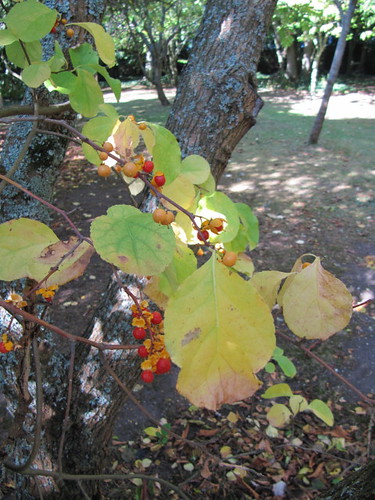
YARD WATCH 1: Asiatic Bittersweet
Asiatic Bittersweet, a climbing vine with red berries surrounded by yellow capsules, is beautiful in the Fall, but a deadly invasive strangler of trees. Check your yard for this invasive tree vine. For more information on how to identify Asiatic Bittersweet and eradicate it, go to https://mailchi.mp/blueridgeprism/weed-alert-asiatic-bittersweet
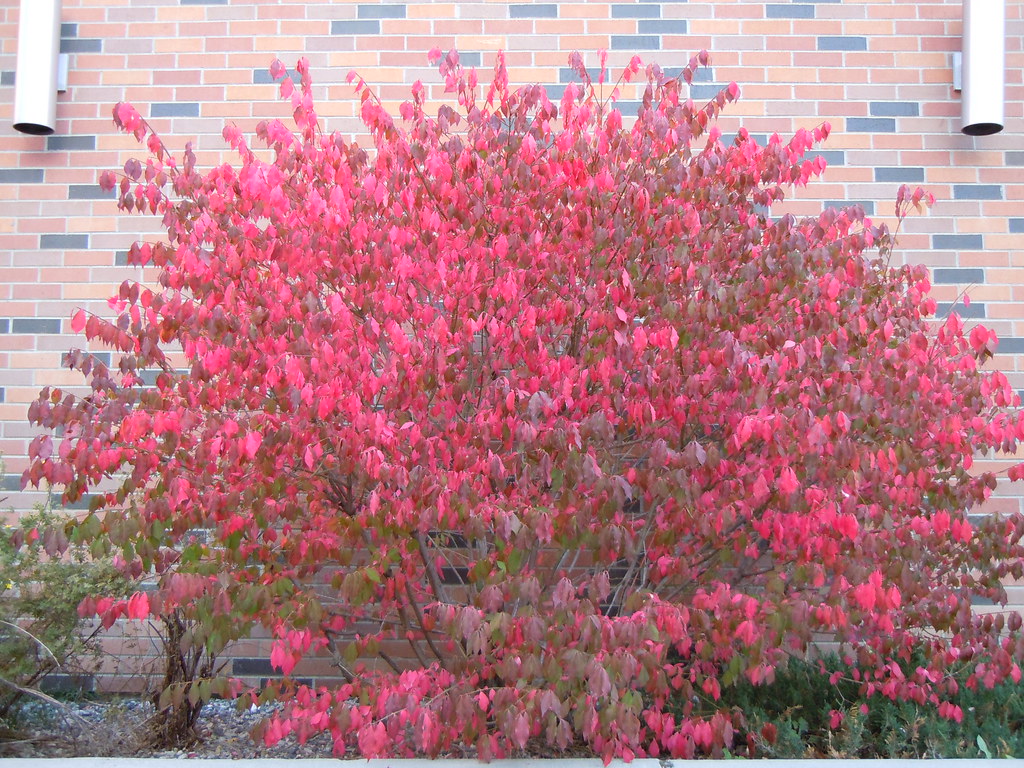
YARD WATCH 2: Burning Bush
Fall colors have been lovely, but that bright red bush in your yard known as BURNING BUSH, while admittedly beautiful this time of year, is environmentally destructive. The bushes drop a large number of seeds that can be transported to nearby woodlands, and roots form a dense mat under the soil, crowding out native plants. Native birds and pollinators rely on native plants. Burning bush reduces the availability of food to our native species. Sale of this plant is banned or restricted in five states, and it is officially considered invasive in 21 states including Virginia. The plant is rather drab most of the year, and can be replaced by natives that will give more year-round interest. Find out how to eradicate this bush if it is on your property, and some alternatives to consider, at https://mailchi.mp/blueridgeprism/weed-alert-burning-bush-7853352
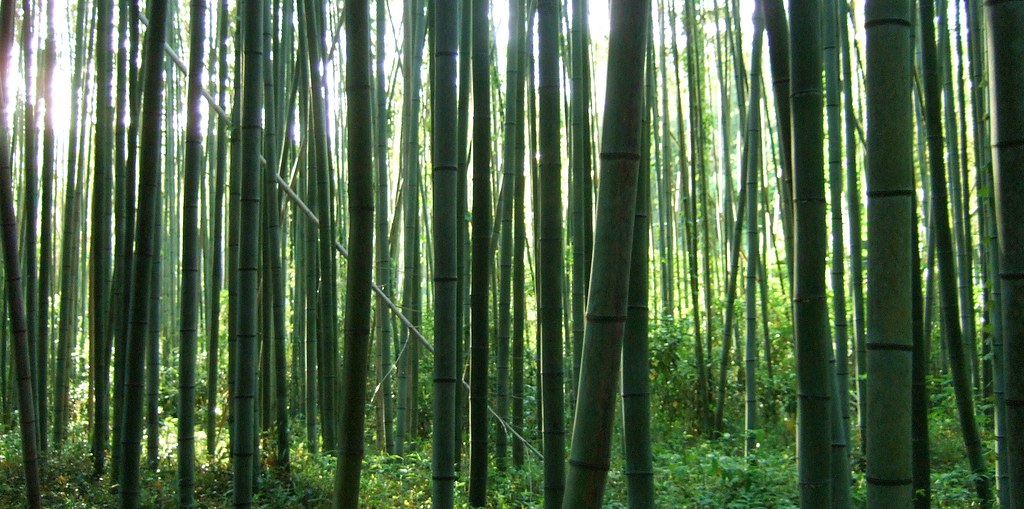
YARD WATCH 3: Bamboo
There is a limitless number of products that can be made from the
bamboo plant; from furniture and flooring, to toothbrush and toilet
paper, to clothing and bedding. It is a formidable plant that can absorb
up to four times more carbon dioxide than trees.
Bamboo was introduced to the US in the 1880s, probably from China,
for ornament and barriers between yards. It is the fastest growing
plant on Earth spreading at almost three feet per day. That is one of
the reasons why bamboo is highly invasive. It also hinders the growth
of native vegetation, threatens biodiversity, and is difficult to remove.
Fairfax County has an ordinance that requires property owners to
contain running bamboo on their property. The ordinance went into
effect on January 2023, and it calls for property owners to prevent
running bamboo from spreading to neighboring properties or public
right-of-way. Property owners who violate the ordinance may face a
fine of up to $2,000 over a 12-month period, with the first violation a
$50 fine, and subsequent violation a $200 fine.
Follow the instructions on the attached link for methods to remove
bamboo from your yard: https://www.masterclass.com/articles/how-to-get-rid-of-bamboo-guide
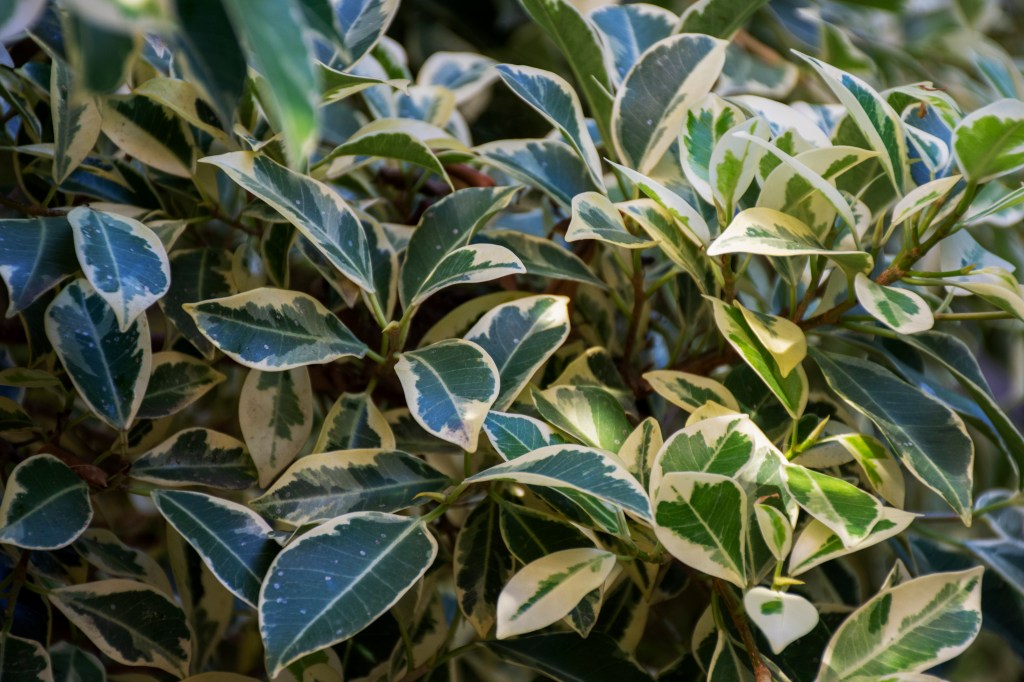
YARD WATCH 4: Wintercreeper (Eounymus fortunei)
Wintercreeper is a perennial evergreen vine. A native plant of China, it was first introduced in 1907 in the US as a groundcover. It is extremely invasive and creates dense thickets on the ground as well as climbs trees. It spreads by rootlets as well as seeds dispersed by birds. It takes away space from native plants and does not act as a host plant to our native pollinators. By climbing on trees, it girdles and weakens them, leading to loss of mature trees.
Best way to control it is to remove the whole plant and all the roots, if possible. If it is a vine, it is best to cut it and treat the stump with 20% glyphosate or trichlopyr. More information on wintercreeper can be found here.
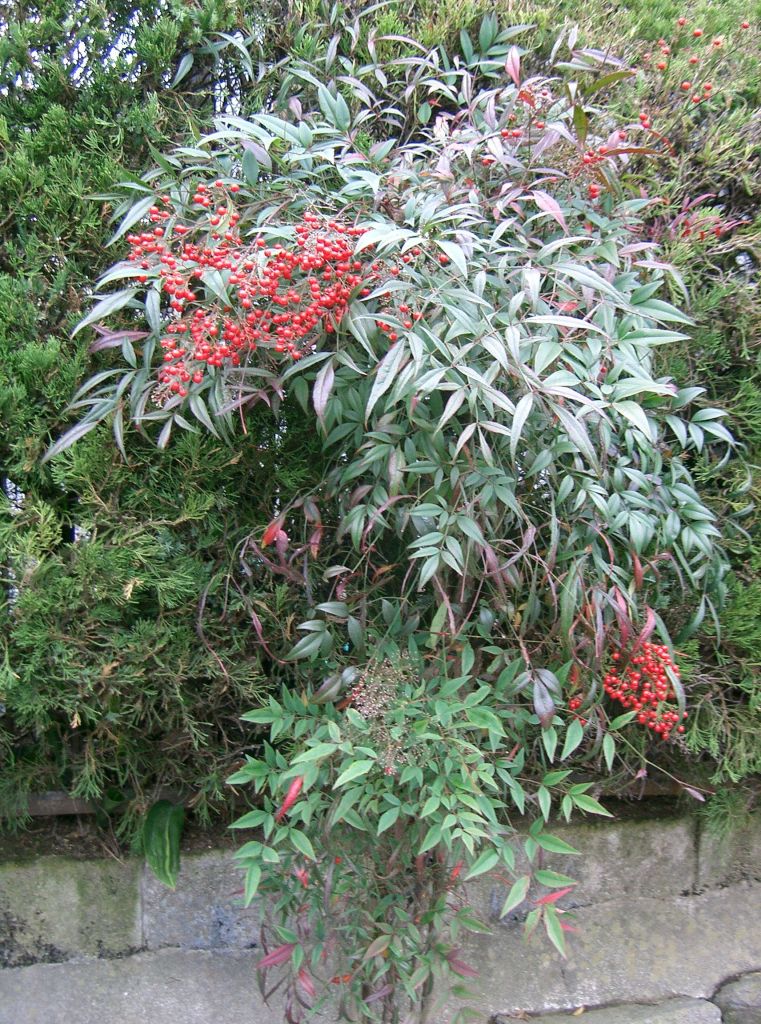
YARD WATCH 5: Nandina
Nandina, also known as sacred bamboo or heavenly bamboo, is a flowering shrub with brightly colored pink leaves in the spring, pinkish-white flowers in early summer, and vibrant red foliage in the fall.
But don’t be fooled by its beauty, this plant is extremely toxic to birds and mammals, especially in the late winter when other food sources are scarce. Widely grown in gardens throughout Fairfax County, nandina has been added to the Virginia Invasive Plant Species List as an invasive plant that poses a threat to Virginia’s ecosystem.
To get rid of nandina remove all berries, cut the stem to the ground, and dig out the entire root. Persist, as nandina can readily grow from remaining root system. Good native alternatives to nandina are Virginia sweetspire, strawberry bush, and winterberry. For additional information, read the Master Gardeners of Northern Virginia (MGNV) website: https://mgnv.org/plants/invasive-plants/nandina/
YARD WATCH 6: Callery Pears
Callery pear (Pyrus calleryana) trees were introduced in the US in the early 1900’s. It is a medium-sized tree with pretty white flowers. However, it is extremely invasive and spreads rapidly along roads, fields, disturbed areas and even into our forests. It quickly pushes out native plants by causing dense thickets with sharp, woody thorns, and also by releasing a chemical that suppresses other plant growth. It produces copious amounts of small fruits in the fall which are readily eaten and spread by and small mammals. The bad news on Callery pears continues – the blooms smell like rotten fish and the trees are prone to splitting and falling in storms. It costs homeowners several hundred dollars to remove each Callery pear tree.
To control Callery pears, the tree needs to be cut down and the stump treated with herbicide immediately. More information can be found on VA Invasive website, including herbicide application. The VA Department of Forestry has an exchange program for Callery pear trees in Harrisonsburg, VA.

YARD WATCH 7: Garlic mustard (Allaria petiolata)
Garlic mustard (Allaria petiolata) is an invasive plant found throughout the Northeastern and Midwestern US. Its leaves give off a garlic smell when crushed. A Eurasian native, it spreads quickly, creating a monoculture while displacing native flowers such as spring beauty, trilliums and Virginia bluebells.
Garlic mustard produces allelopathic chemicals that not only inhibit the growth of other close-by plants and trees, but also kill off the butterflies that try to feed on the leaves. It appears bi-annually as a rosette of leaves in the first year that grows up to 3 feet tall with white flowers in the second year. Look for them blooming in Fairfax County in April and May.
For control, the best option is to pull it up by all its roots, before it goes to seed by the end of May. Do not put the plants in compost. Instead, bag them up and place them in your household garbage for pickup. More information can be found at:
https://www.nature.org/en-us/about-us/where-we-work/united-states/indiana/stories-in-indiana/garlic-mustard/

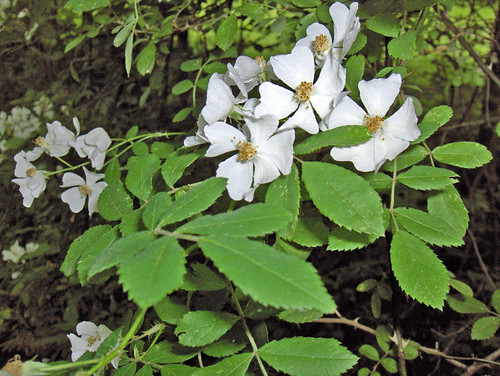
YARD WATCH 8: Multiflora Rose
Multiflora rose, a shrub native to China, Japan and Korea, was introduced into the US in the 1860’s as an ornamental plant and as rootstock for rose breeding programs. Multiflora is very invasive and is present in 44 states in the US, and its sale
has been banned in several states. Although Virginia includes multiflora rose in the Virginia Invasive Plant Species List, the sale of multiflora rose is not yet banned.
Multiflora rose identification:
https://www.youtube.com/shorts/CTOm_uTBP8AMultiflora rose leafs out early and out-competes the surrounding natives. As a rambling and climbing shrub, it can smother small trees and shrubs by climbing on them. It produces about 500,000 seeds annually which can be viable for a
number of years. It resprouts when the canes are cut, so the best way to control it is to remove small plants from the root or cut large shrubs to the ground and apply glyphosate to the cut stems.
https://www.ecolandscaping.org/07/landscape-challenges/invasive-plants/multiflora-rose-an-exotic-invasive-plant-fact-
YARD WATCH 9: Japanese Honeysuckle
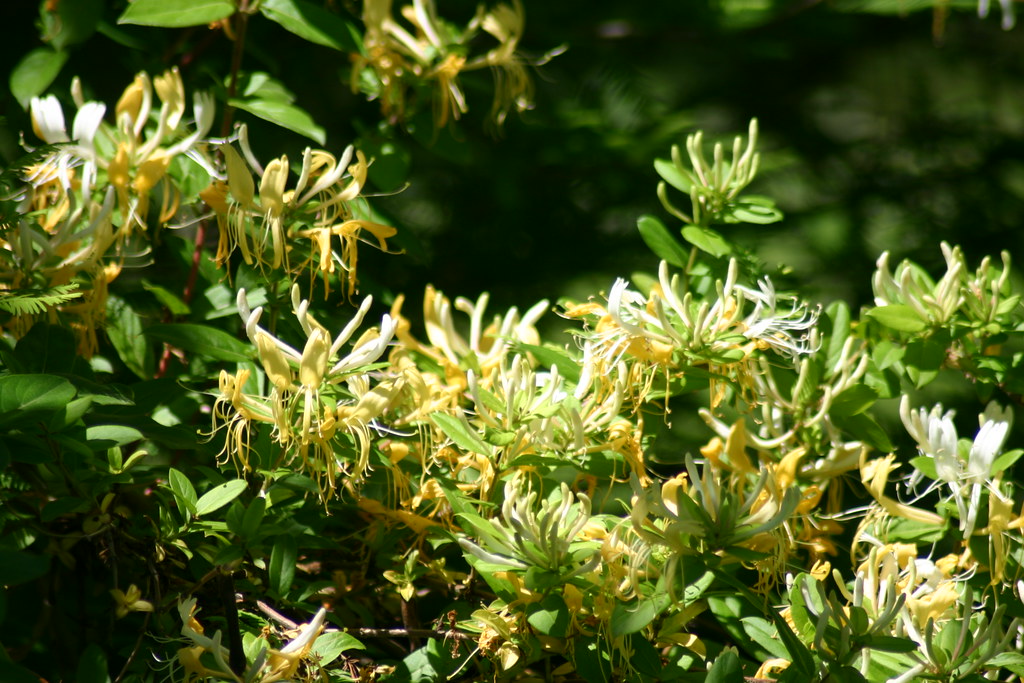
While many might enjoy the sweet smell and taste of Japanese honeysuckle, it is actually highly invasive and destructive.
Japanese honeysuckle was introduced in the US in 1806 for horticulture and erosion control. However, it has since escaped gardens and is an invasive vine in most of the eastern and south eastern US. Japanese honeysuckle is adaptable to various climate conditions and its ecological threat arises from the fact that it climbs around trees and shrubs, eventually girdling the trees. It takes away space from native vegetation on the ground and weakens the trees it girdles, eventually leading to disease and death of the trees. More information, including its control, found here: https://www.invasive.org/alien/pubs/midatlantic/loja.htm. Here is a link to help identify immature Japanese honeysuckle: Invasive Japanese honeysuckle ID part 1
Good native alternative vines are Coral/Trumpet Honeysuckle (Lonisera simpervirens), Trumpet Creeper (Campsis radicans), or Crossvine (Bignonia capreolata).
YARD WATCH 10: Porcelain Berry
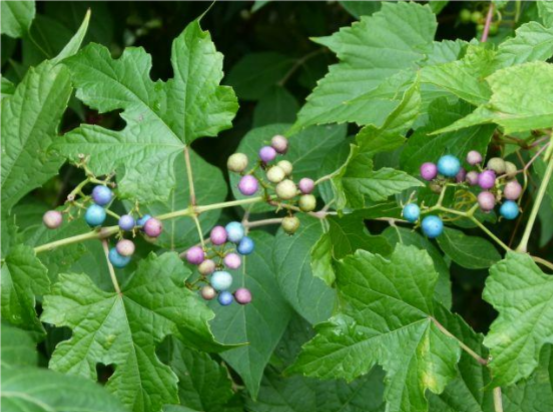
Those small pale violet, green and bright blue berries that you see in the
summer months are most likely the fruits of the porcelain berry vine
(Ampelopsis brevipedunculata). The widely variable berry colors make it a
unique sight in gardens, and it was one of the reasons why it was brought as
an ornamental and landscaping plant from Japan and China in 1870.
But be warned, porcelain berry is an invasive woody, perennial vine which
can easily climb up and around trees, shading out shrubs and seedlings of
native plants. The vines of porcelain berry are aggressive, growing quickly
(up to 20 feet in a year), to form large mats over existing vegetation.
Information on identification and removal of porcelain berry can be found
here.
A quick way to reduce the spread of porcelain berry is to clip and bag the
berries as they ripen on the vine, so birds cannot spread the seeds. You can
pull young vines out of the ground during any season, carefully making sure to
remove root stock. Make sure it goes in the trash, not composting.
A lovely native alternative for porcelain berry is the Crossvine (Bignonia
capreolata) with its showy orange-red trumpeted flowers that attracts
hummingbirds and butterflies.
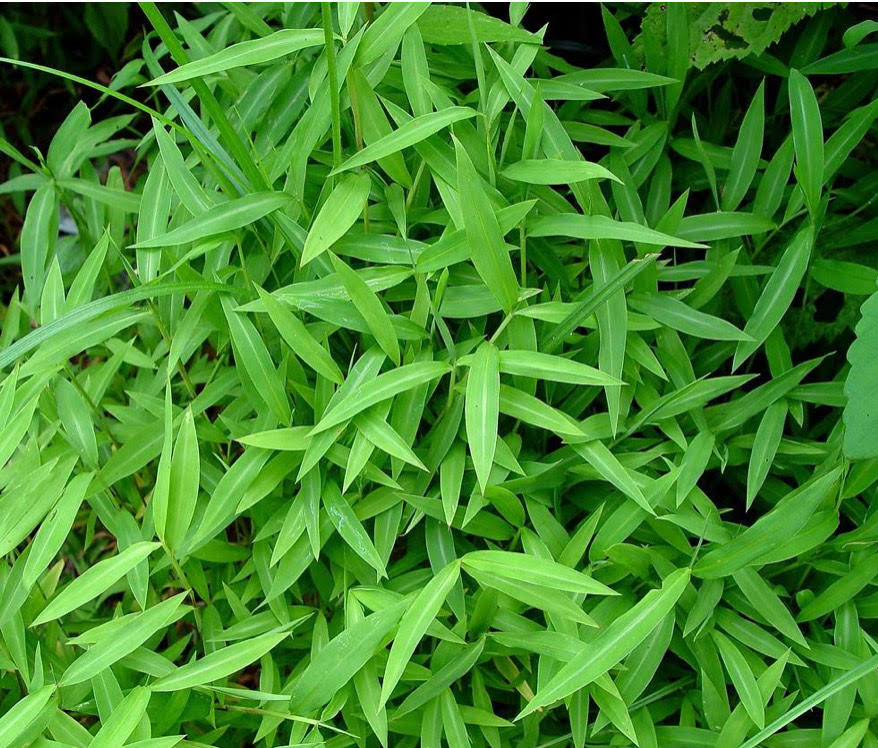
YARD WATCH 11: Japanese Stiltgrass
Japanese Stiltgrass (Microstegium vimineum), a native grass of Asia, was first discovered in the US in 1919 and is believed to have arrived here through packing material.
In the US it aggressively invades forest, roadside, floodplains, gardens and parks to crowd out native vegetation. It grows in shade just as well as it does in sunny areas. Although it is an annual grass, it seeds profusely and the seeds can be viable up to 5 years. So it is important to remove stillgrass before it goes to seed in late summer.
Japanese stiltgrass leaves have a silvery midrib with leaves tapering on both ends, and a poor root system. A video identifying stiltgrass can be seen in this link: Japanese Stiltgrass | National Invasive Species Information Center.
Large areas of infestation can be removed with a string trimmer before stiltgrass goes to seed. If manual removal is impossible, chemical treatment can be found here.
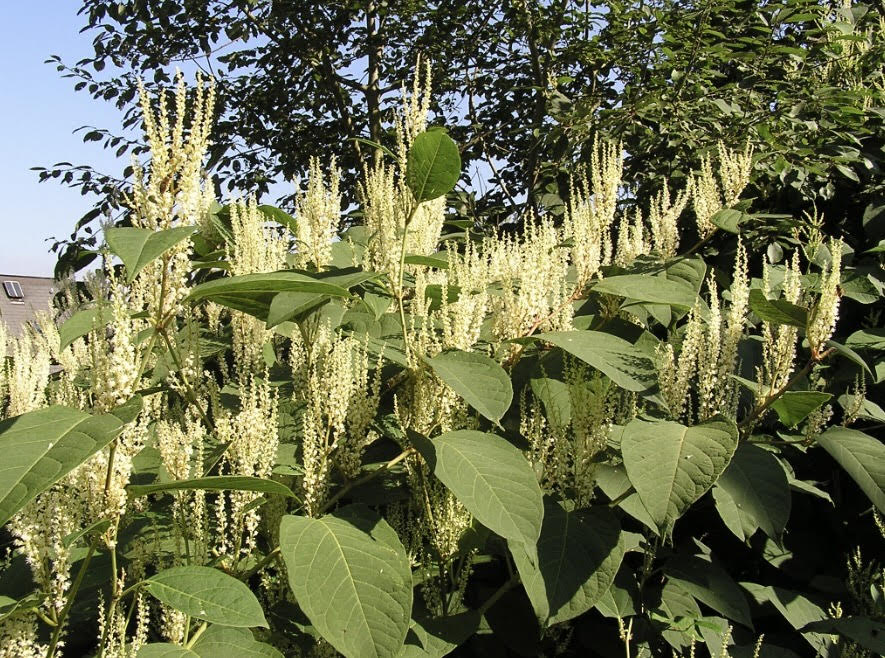
YARD WATCH 12: Japanese Knotweed
Japanese Knotweed was brought to the US for ornamental and erosion control purposes in the 1800s. It is a perennial herbaceous plant which likes to grow in shady moist to wet areas such as banks or creeks and ponds.
It grows aggressively in one season to form tall thickets. Its rhizomes can grow up to 10 feet deep and spread 8 ft. wide in one season, blocking light and taking away space from native plants. It can also sprout from root and stem material dispersed by water, fill, or landscaping equipment. In Virginia it blooms in August to September before bearing seeds.
Control of Japanese knotweed is extremely problematic as manual removal is tremendously difficult and foliar herbicides do not kill the extensive root system. The herbicides that do not kill the roots also affect the surrounding plants and can persist in soil for up to one year.
More information on Japanese knotweed and its control can be found here.
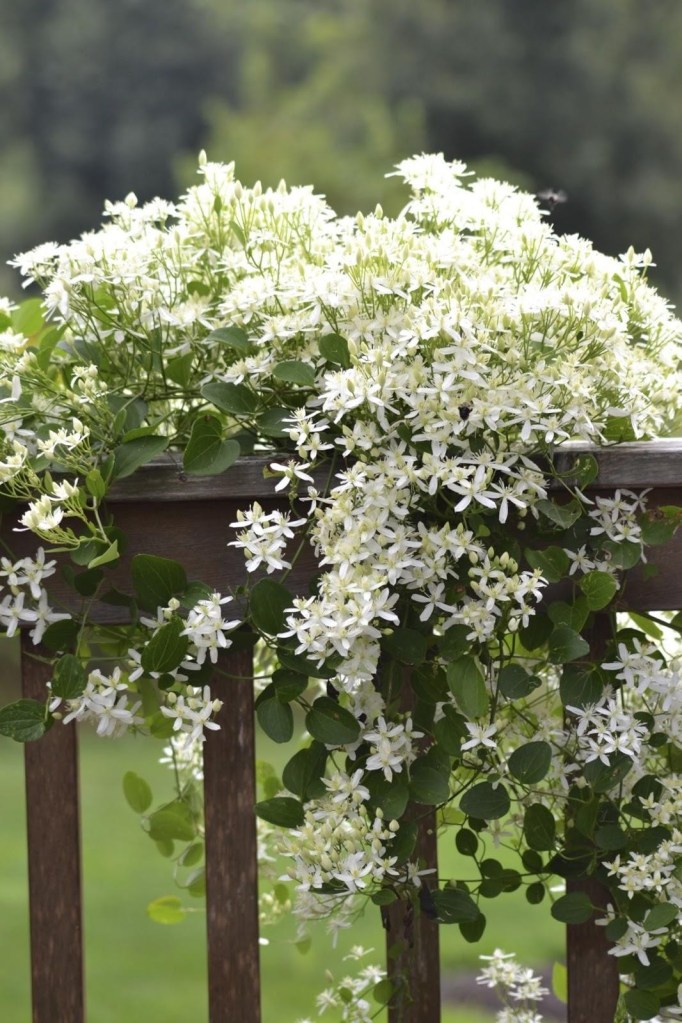
YARD WATCH 13: Sweet Autumn Clematis
Check your yard for sweet autumn clematis (Clematis terniflora). This vine, originally from China and Japan, has small white blooms September through October, but it climbs woody plants or spreads on the ground, smothering native plants. Producing profuse seeds, it escapes gardens and has invaded forests, roadsides, streambanks, and vacant lots. Identification and control methods can be found here.
Although it is included in VA’s Invasive Plant Species List, it is unfortunately still being sold in nurseries across Virginia.
More information on native alternatives can be found here.
YARD WATCH 14: Bush Honeysuckle
There are four species of invasive bush honeysuckles – Lonicera maackii (Amur), L. morrowii (Morrow’s), L. tartarica (Tartarian), L. X bela (Belle’s) – that dominate the understory of parks, forests, and roadsides. All these bush honeysuckle species originated from Eurasia and were brought to the US during the late 1800s.
Buch honeysuckle species grow densely, crowding out native plants and disrupting the food webs that insects and birds rely on. Serious infestations of buch honeysuckle species can inhibit tree regeneration, essentially stopping forest succession.
Control of bush honeysuckle species involves manual removal, and applying herbicide to the stumb after cutting.
Native alternatives to invasive bush honeysuckle species include dogwoods (Cornus sps), Winterberry holly (Ilex verticillata), red chokeberry (Aronia melanocarpa), Nothern arrowwood (Vibernum dentatum).
More information on bush honeysuckle identification and management can be found here.

YARD WATCH 15: Asian Holly
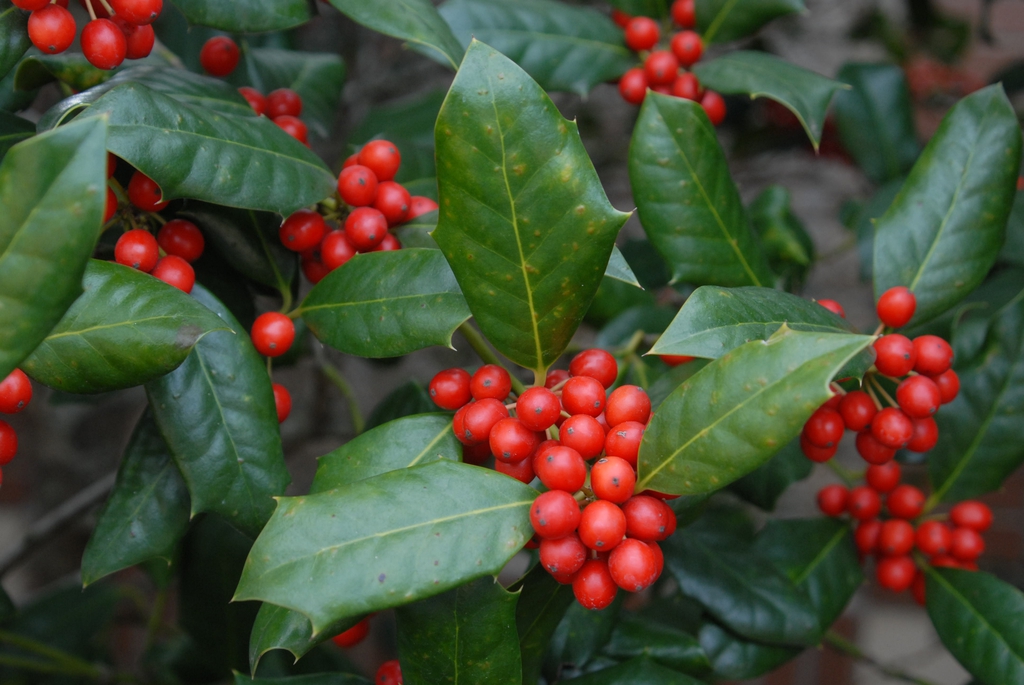
Holly, with its bright red berries and glossy green leaves, is often associated with winter holidays in the US. Yet many of the holly trees planted in our area and sold in nurseries are either native to Asia or hybrids, and were introduced to the US in the late 1800s as ornamental plants.
Chinese holly (Ilex cornuta) is a common landscaping plant, along with its many cultivars. One cultivar, Ilex Nellie R Stevens, is extensively planted in this area. Another common non-native holly is Ilex crenata, sky pencil Japanese holly.
Hollies escape landscaped areas via bird-dispersed berries, and invade forests. They form dense thickets that shade out native shrubs and seedlings which in turn reduces plant diversity. Asian hollies provide far less ecological value than native hollies.
Good native alternatives to Asian hollies are: Ilex opaca (the native American holly), Ilex vomitoria (Yaupon holly), Ilex glabra (Inkberry), Ilex verticillata.
YARD WATCH 16: Common Greenbrier (NATIVE)
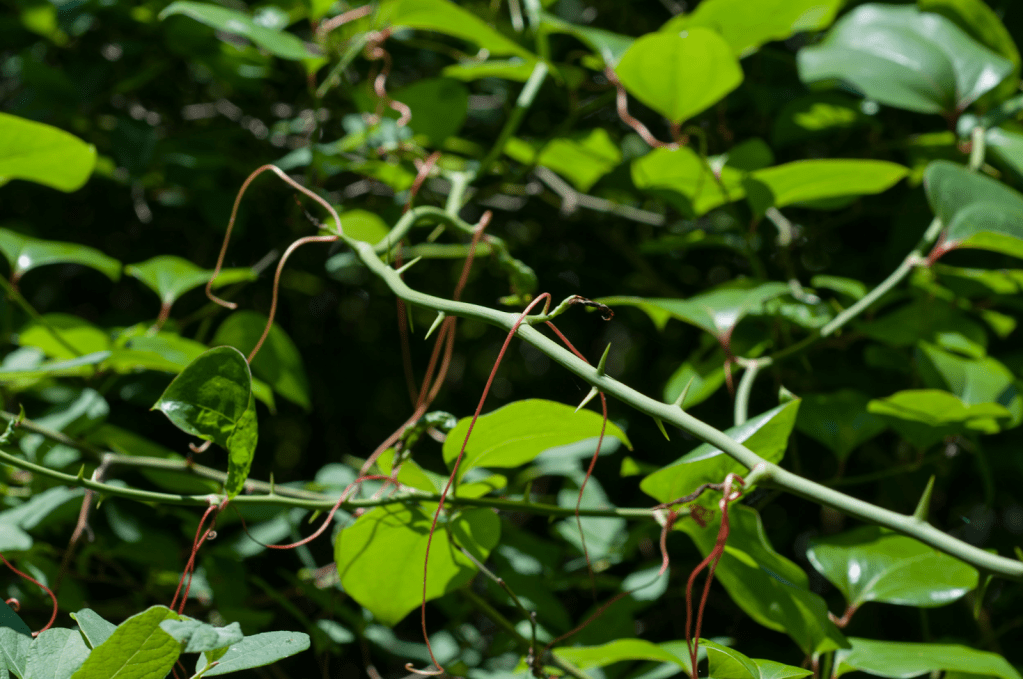
Common greenbrier (Smilax rotundifolia), sometimes referred to as “nature’s barbed wire,” is a native plant in northern Virginia. We are showcasing it here, where we usually identify non-native northern Virginia plants, because it is often mistaken for the non-native, highly invasive multiflora rose, and also because it is so inhospitable to humans that gardeners often attempt to eradicate it.
Both multiflora rose and greenbrier have bright green smooth stems year round, but multiflora rose has hooked thorns while greenbrier has straight thorns. Although greenbrier can be a hassle for gardeners, it is a vital plant for wildlife.
Greenbrier can grow in a variety of habitats from shady to sunny and from dry to wet conditions. Greenbrier benefits both songbirds and small mammals with the plant providing nesting and escape cover and the berries providing winter food. Native insects feed on the flowers and leaves. Owlet moth larvae often feed on the leaves of greenbrier, making it a crucial part of their life cycle.
Enjoy this evergreen plant in your yard. Like poison ivy, another native plant that is onerous to humans despite its benefits to wildlife, consider cutting back greenbrier only if it is in pathways or impeding access to non-native plants you are looking to remove.
 FIRA Fairfax Invasive Removal Alliance