
YARD WATCH 2
Asiatic Bittersweet, a climbing vine with red berries surrounded by yellow capsules, is beautiful in the Fall, but a deadly invasive strangler of trees. Check your yard for this invasive tree vine. For more information on how to identify Asiatic Bittersweet and eradicate it, go to https://mailchi.mp/blueridgeprism/weed-alert-asiatic-bittersweet
YARD WATCH 1
Trees in Fairfax County are being overtaken by invasive vines, and native plants are being crowded out by non-native invasives, vastly reducing our population of native birds, and pollinators such as butterflies and bees. In the coming months, this new section of the supervisor newsletter will bring you ideas for how to save your trees from invasive vines, rid your yard of non-native plants, and create a more biodiverse yard space through the inclusion of native plants. This month we encourage you to check out these resources:
Fairfax Invasive Removal Alliance (FIRA): Consider having your neighborhood association join this coalition that is uniting Fairfax County residents to address the native plants crisis www.https://firaadvocacy.com
Plant NOVA Natives: Make using native plants in the Northern Virginia landscape easy and fun with everything from a plant finder app to a list of sustainable landscapers www.https://plantnovanatives.crg
Blue Ridge Prism: Check your yard for the invasive plants identified on their fact sheets and learn ways to eradicate these www.https://blueridgeprism.org
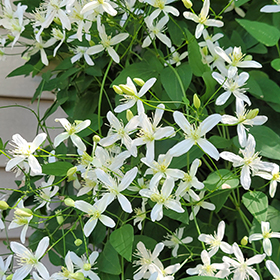
Yard Watch 13: Sweet autumn Clematis (Clematis terniflora)
Check your yard for sweet autumn clematis. This vine, originally from Japan and China, blooms with small, sweet-smelling flowers in September through October. It climbs woody plants or spreads on the ground, smothering native plants. Producing profuse seeds, it has escaped gardens and has invaded forests, roadsides, vacant lots and stream banks.
Identification and control methods can be found here. Although it is included in the Virginia Department of Conservation and Recreation’s Invasive Plant Species list, it is still being sold in nurseries across the state.
More information on native alternatives can be found here.
Yard Watch 14: Invasive Bush Honeysuckles (Lonicera sp)
There are four species of invasive bush honeysuckles – Lonicera maackii (Amur), L. tartarica (Tartarian), L. morrowi (Morrow’s), and L. X bella (Belle’s) – that commonly dominate the understory of parks, forests, and roadsides in Virginia. All these bush honeysuckle species originated in Eurasia and were brought to the US between the mid to late 1800’s. More information on bush honeysuckles invasive to Virginia can be found here.
Bush honeysuckle species grow densely, crowding out native species and disrupting the food webs that native insects and birds rely on. Serious infestations of invasive bush honeysuckles can inhibit tree regeneration, essentially stopping forest succession.
Native plant alternatives to bush honeysuckles include dog woods (Cornus spa), Winterberry holly (Ilex verticillata), red chokeberry (Aronia melanocarpa), and Northern arrow wood (Viburnum dentatum).
More information on invasive bush. honeysuckle identification and management can be found here.
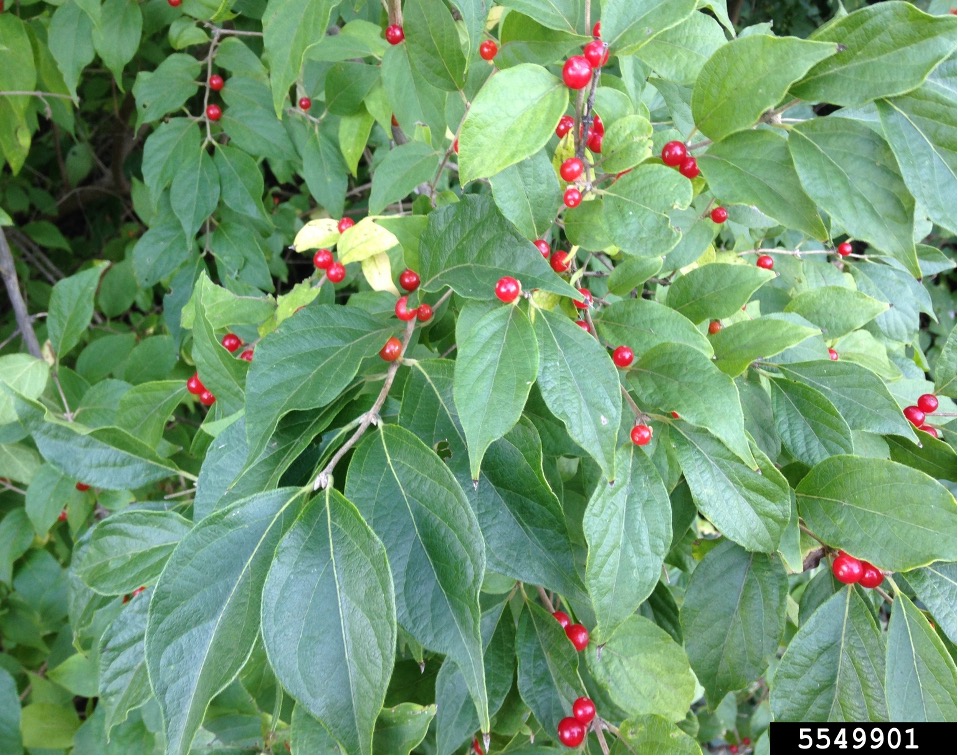
Lonicera maackii (Amur honeysuckle)
 FIRA Fairfax Invasive Removal Alliance